Week 188: From ‘Peter Grimes’, by George Crabbe

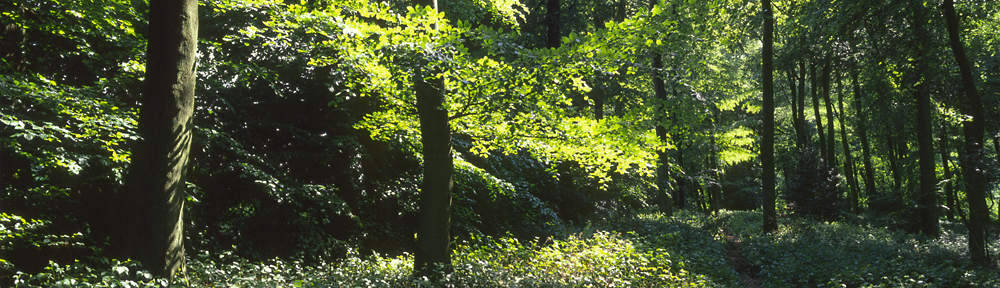
I tend to think of George Crabbe (1754-1832) as predominantly an eighteenth-century poet, though in fact he was active into the nineteenth, was on friendly terms with Wordsworth and the Lake poets, and was much approved by Byron. Now, I confess that the feeling I get from much eighteenth-century verse is one of claustrophobic brilliance: so deft, so accomplished, so narrowly social – you want to shout ‘Hey, guys, there’s a world out there, what about it?’. Well, with Crabbe you get the world out there all right, but the claustrophobia doesn’t get any less. In ‘Peter Grimes’ the Suffolk coastal landscape is used to devastatingly oppressive effect to mirror the entrapment of a soul damned by its own devices. This passage in particular has always seemed to me quite extraordinary in its use of that favourite eighteenth-century form, the heroic couplet, matching Pope for fluency, Swift for mordancy, yet reaching beyond both to a Shakespearean richness of language and perception.

When tides were neap, and, in the sultry day,
Through the tall bounding mudbanks made their way,
Which on each side rose swelling, and below
The dark warm flood ran silently and slow;
There anchoring, Peter chose from man to hide,
There hang his head, and view the lazy tide
In its hot slimy channel slowly glide;
Where the small eels that left the deeper way
For the warm shore, within the shallows play;
Where gaping mussels, left upon the mud,
Slope their slow passage to the fallen flood;
Here dull and hopeless he’d lie down and trace
How sidelong crabs had scrawled their crooked race;
Or sadly listen to the tuneless cry
Of fishing gull or clanging goldeneye;
What time the sea birds to the marsh would come,
And the loud bittern, from the bulrush home,
Gave from the salt-ditch side the bellowing boom.
He nursed the feelings these dull scenes produce,
And loved to stop beside the opening sluice,
Where the small stream, confined in narrow bound,
Ran with a dull, unvaried, saddening sound;
Where all presented to the eye or ear
Oppressed the soul with misery, grief, and fear.

George Crabbe

Week 187: Mr Flood’s Party, by Edwin Arlington Robinson

Could anything express the isolation and desolation of old age better than the closing four lines of this poem? It makes an interesting comparison with Robert Frost’s ‘An Old Man’s Winter Night’, and indeed Robinson may be counted as one of Frost’s influences. Robinson’s diction may be more consciously literary, but there is the same awareness that sometimes the more simply things are said the better they are said.

I remember when I first read the poem at school my literal mind was puzzled by the phrase ‘with only two moons listening’. I felt we could rule out the possibility that the action was taking place on Mars. So did this mean Eben was seeing double because he was drunk? Didn’t seem very poetic. In the end I decided that the second moon must be the remembered harvest moon of other days. For ‘Time present and time past/Are both perhaps present in time future/And time future contained in time past.’

Mr Flood’s Party

Old Eben Flood, climbing alone one night
 Over the hill between the town below
And the forsaken upland hermitage
That held as much as he should ever know
On earth again of home, paused warily.
The road was his with not a native near;
And Eben, having leisure, said aloud,
For no man else in Tilbury Town to hear:

 ‘Well, Mr. Flood, we have the harvest moon
Again, and we may not have many more;
The bird is on the wing, the poet says,
And you and I have said it here before.
Drink to the bird.’ He raised up to the light
The jug that he had gone so far to fill,
And answered huskily: ‘Well, Mr. Flood,
Since you propose it, I believe I will.’

Alone, as if enduring to the end
A valiant armor of scarred hopes outworn,
He stood there in the middle of the road
Like Roland’s ghost winding a silent horn.
Below him, in the town among the trees,
Where friends of other days had honored him,
A phantom salutation of the dead
Rang thinly till old Eben’s eyes were dim.

Then, as a mother lays her sleeping child
Down tenderly, fearing it may awake,
He set the jug down slowly at his feet
With trembling care, knowing that most things break;
And only when assured that on firm earth
It stood, as the uncertain lives of men
Assuredly did not, he paced away,
And with his hand extended paused again:

‘Well, Mr. Flood, we have not met like this
In a long time; and many a change has come
To both of us, I fear, since last it was
We had a drop together. Welcome home!’
Convivially returning with himself,
Again he raised the jug up to the light;
And with an acquiescent quaver said:
‘Well, Mr. Flood, if you insist, I might.

‘Only a very little, Mr. Flood —
For auld lang syne. No more, sir; that will do.’
So, for the time, apparently it did,
And Eben evidently thought so too;
For soon amid the silver loneliness
Of night he lifted up his voice and sang,
Secure, with only two moons listening,
Until the whole harmonious landscape rang —

‘For auld lang syne.’ The weary throat gave out,
The last word wavered; and the song being done,
He raised again the jug regretfully
And shook his head, and was again alone.
There was not much that was ahead of him,
And there was nothing in the town below —
Where strangers would have shut the many doors
That many friends had opened long ago.

Edwin Arlington Robinson

Week 186: August, 1914, by Isaac Rosenberg

These lines by the First World War poet Isaac Rosenberg (1890-1918) seem to me a good example of a poem that is flawed yet still memorable, of inspiration triumphing over imperfection. For the most part the compact imagery works well: the symbol of war as a consuming fire, destroying affection and memory, ‘the heart’s dear granary’, is underpinned at the literal level by the fact that war can indeed lead to the burning of actual crops in ‘ripe fields’; the symbol of war as hard cold iron, ousting all that is rich and sweet in life, is similarly underpinned by the actual dominance of iron as a battlefield material. The problem I have is with the last line. Yes, this too may work well enough at the symbolic level: war as disfigurer, maiming the mouth, the very source of utterance, in the way it perverts human speech for the purposes of hate and propaganda. But at the literal level a broken tooth, on the scale of what war can do to the human body, strikes a rather bathetic note, and one can’t help wondering if Rosenberg got into difficulties having to find a rhyme for ‘youth’ and didn’t quite manage to extricate himself.

Still, worth it for that middle quatrain alone.

August 1914

What in our lives is burnt
In the fire of this?
The heart’s dear granary?
The much we shall miss?

Three lives hath one life –
Iron, honey, gold.
The gold, the honey gone –
Left is the hard and cold.

Iron are our lives
Molten right through our youth.
A burnt space through ripe fields,
A fair mouth’s broken tooth.

Isaac Rosenberg

Week 185: Spancil Hill, from words by Michael Considine

The beautiful folksong ‘Spancil Hill’ began life as a poem by Michael Considine (1850-1873), an Irish emigrant to the USA who went there in 1870 with the hope of earning enough money to pay passage for his sweetheart Mary MacNamara to come over and join him so that they could be married. But, dogged by ill health, he never managed to do this, and knowing that he had not long to live sent the poem home in remembrance of his love.

Now, in theory I feel that an author’s intentions ought to be respected and it is really not right to go around hijacking original poems and rewriting them. But when the folk tradition gets hold of something, what can you do? And the fact is that the version that has evolved seems to me a good deal better than the original, which is a bit prolix and religiose in places. Indeed, it is fascinating to watch the tradition at work, like a flowing stream smoothing and shaping a stone: here substituting a full rhyme for a clumsy half-rhyme, there quietly dropping lines about a golden stair to heaven and having the sense to dump the last pious stanza altogether and end with that poignant crowing of the cock, yet still preserving all that is essential about the poem, the fine specificity of its longing and heartache.

So, with apologies to Michael Considine, here is the folk version that I know best. For those interested, the original version, and a great deal of discussion about the song, can be found on the Mudcat site.

Spancil Hill

Last night as I lay dreaming of pleasant days gone by
My mind being bent on rambling to Ireland I did fly.
I stepped on board a vision and I followed with a will
And I shortly came to anchor at the cross of Spancil Hill.

It being the 23rd June the day before the fair
When Ireland’s sons and daughters in crowds assembled there,
The young and the old, the brave and the bold their duty to fulfill.
There were jovial conversations at the fair of Spancil Hill.

I went to see my neighbors to hear what they might say
The old ones were all dead and gone and the young ones turning grey.
I met with the tailor Quigley, he’s as bold as ever still
Sure he used to make my britches when I lived in Spancil Hill.

I paid a flying visit to my first and only love
She’s white as any lily and as gentle as a dove
She threw her arms around me saying ‘Johnny I love you still’.
Oh she’s Mack the Ranger’s daughter and the flower of Spancil Hill.

I dreamt I held and kissed her as in the days of yore.
She said, ‘Johnny you’re only joking as many’s the time before’.
The cock crew in the morning, he crew both loud and shrill.
I awoke in Californi-ay, many miles from Spancil Hill.

Week 184: The usual subject, by Simon Darragh

A brief but poignant look at bereavement, that rings very true; I remember how my mother’s fortitude after the death of my father finally broke down when she opened the wardrobe on his old brown jacket smelling of tobacco.

The usual subject

One grows used to the loss itself;
it is the details catch, and scourge:
the extra tea-cup on the shelf;
the kitchen table, grown too large.

Not in sorrow for wasted days
of love unspoken,
but by trivia such as these
the heart is broken

Simon Darragh

Week 183: The Death of Peter Esson, by George Mackay Brown

Another craggily individualist elegy by the Orkney poet George Mackay Brown.

The Death of Peter Esson
Tailor, Town Librarian, Free Kirk Elder

Peter at some immortal cloth, it seemed,
Fashioned and stitched, for so long had he sat
Heraldic on his bench. We never dreamed
It was his shroud that he was busy at.

Well Peter knew his thousand books would pass
Grey into dust, that still a tinker’s tale
As hard as granite and as sweet as grass
Told over reeking pipes, outlasts them all.

The Free Kirk cleaves gray houses – Peter’s ark
Freighted for heaven galeblown with psalm and prayer.
The predestined needle quivered on the mark.
The wheel spun true. The seventieth rock was near.

Peter, I mourned. Early on Monday last
There came a wave and stood above your mast.

George Mackay Brown, 1959

Week 182: Kerr’s Ass, by Patrick Kavanagh

Another of my favourite Patrick Kavanagh poems, that shows his extraordinary gift for the transmutation of the mundane.

Kerr’s Ass

We borrowed the loan of Kerr’s big ass
To go to Dundalk with butter,
Brought him home the evening before the market
An exile that night in Mucker.

We heeled up the cart before the door,
We took the harness inside —
The straw-stuffed straddle, the broken breeching
With bits of bull-wire tied;

The winkers that had no choke-band,
The collar and the reins . . .
In Ealing Broadway, London Town
I name their several names

Until a world comes to life —
Morning, the silent bog,
And the God of imagination waking
In a Mucker fog.

Patrick Kavanagh


Week 181: Masters of War, by Bob Dylan

‘Just how good a poet is this Bob Dylan chap?’, I have sometimes been asked by those wanting my ‘professional opinion’. Not an easy question – there is a lot of Bob Dylan, and indeed it could be argued that there are a lot of Bob Dylans. And how do you separate the words from the music, and how fair is it even to try? I can only say that the question seems to me well worth asking, and that personally as a poet my preference is for Bob Dylan the apparently sober writing under the influence of ancient ballads over Bob Dylan the apparently stoned writing under the influence of Dylan Thomas. So, for example, I take ‘Masters of War’, ‘The Lonesome Death of Hattie Carroll’ and ‘Girl from the North Country’ over ‘Mr Tambourine Man’ and ‘Visions of Johanna’, tunefully compelling though the latter two may be. So where does that leave us? With lyrics a bit rough-hewn in places, and sometimes having all the subtlety of a sledgehammer, but maybe none the worse for that, and I for one can never forget being stopped dead in my tracks one afternoon in the early sixties by my first encounter with Dylan in the shape of ‘Masters of War’. Popular music with content – whatever next? As it turned out, there was quite a lot next.

Masters of War

Come you masters of war
You that build the big guns
You that build the death planes
You that build all the bombs
You that hide behind walls
You that hide behind desks
I just want you to know
I can see through your masks

You that never done nothin’
But build to destroy
You play with my world
Like it’s your little toy
You put a gun in my hand
And you hide from my eyes
And you turn and run farther
When the fast bullets fly

Like Judas of old
You lie and deceive
A world war can be won
You want me to believe
But I see through your eyes
And I see through your brain
Like I see through the water
That runs down my drain

You fasten all the triggers
For the others to fire
Then you sit back and watch
When the death count gets higher
You hide in your mansion
While the young people’s blood
Flows out of their bodies
And is buried in the mud

You’ve thrown the worst fear
That can ever be hurled
Fear to bring children
Into the world
For threatening my baby
Unborn and unnamed
You ain’t worth the blood
That runs in your veins

How much do I know
To talk out of turn
You might say that I’m young
You might say I’m unlearned
But there’s one thing I know
Though I’m younger than you
That even Jesus would never
Forgive what you do

Let me ask you one question
Is your money that good?
Will it buy you forgiveness
Do you think that it could?
I think you will find
When your death takes its toll
All the money you made
Will never buy back your soul

And I hope that you die
And your death’ll come soon
I will follow your casket
In the pale afternoon
And I’ll watch while you’re lowered
Down to your deathbed
And I’ll stand o’er your grave
‘Til I’m sure that you’re dead

Bob Dylan

Week 180: July Evening, by Norman MacCaig

I find this poem by the Scots poet Norman MacCaig (1910-1996) very satisfying for the way it combines practical observation with transcendent vision in a way perhaps reminiscent of Patrick Kavanagh’s poems of rural Ireland.

July Evening

A bird’s voice chinks and tinkles
Alone in the gaunt reedbed –
Tiny silversmith
Working late into the evening.

I sit and listen. The rooftop
With a quill of smoke stuck in it
Wavers against the sky
In the dreamy heat of summer.

Flowers’ closing time: bee lurches
Across the hayfield, singing
And feeling its drunken way
Round the air’s invisible corners.

And grass is grace. And charlock
Is gold of its own bounty.
The broken chair by the wall
Is one with immortal landscapes.

Something has been completed
That everything is part of,
Something that will go on
Being completed forever.

Norman MacCaig

Week 179: At Grass, by Philip Larkin

In the introduction to his 1962 anthology ‘The New Poetry’ the critic Al Alvarez called this poem ‘elegant and unpretentious and rather beautiful in its gentle way’ but saw it as too genteel and went on to compare it unfavourably with the Ted Hughes poem ‘A Dream of Horses’, which he praised for its greater urgency, its reaching back to ‘a nexus of fear and sensation’. Now, if we must turn poetry into some kind of slugfest there are indeed Hughes poems that can go toe to toe with good Larkin, but I really do not think ‘A Dream of Horses’ is one of them, and surely only a very blinkered adherence to an ideological preconception of poetry could have allowed Alvarez to think that it was. Yes, Larkin’s horses are, as Alvarez says, social creatures, seen through a prism of human association, but rightly or wrongly that is the way most of us, genteel or not, see horses, and I can only say that fifty years on, I can’t remember a line of the Hughes poem, but ‘At Grass’ is still there, elegant and elegiac, full of Larkin’s exquisitely precise verbal play – consider that ‘distresses’ – and moments of what Seamus Heaney called Larkin’s ‘Shakespearean felicity’.

At Grass

The eye can hardly pick them out
From the cold shade they shelter in,
Till wind distresses tail and mane;
Then one crops grass, and moves about —
The other seeming to look on —
And stands anonymous again.

Yet fifteen years ago, perhaps
Two dozen distances sufficed
To fable them: faint afternoons
Of Cups and Stakes and Handicaps,
Whereby their names were artificed
To inlay faded, classic Junes —

Silks at the start: against the sky
Numbers and parasols: outside
Squadrons of empty cars, and heat,
And littered grass: then the long cry
Hanging unhushed till it subside
To stop-press columns on the street.

Do memories plague their ears like flies?
They shake their heads. Dusk brims the shadows.
Summer by summer, all stole away,
The starting-gates, the crowds and cries —
All but the unmolesting meadows.
Almanacked, their names live; they

Have slipped their names, and stand at ease,
Or gallop for what must be joy,
And not a fieldglass sees them home,
Or curious stop-watch prophesies:
Only the groom, and the groom’s boy,
With bridles in the evening come.

Philip Larkin