Week 716: Lochan, by Kathleen Jamie

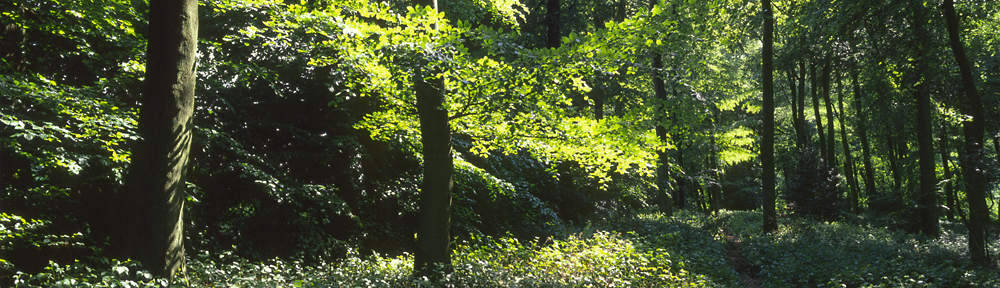
I think that this beautiful poem by the Scots poet Kathleen Jamie (1962-), so tranquil on the surface, is about the secret places of the heart, about the dream of casting off all duties and expectations, even those of poetry, and returning to that state of pure being in which the poems are actually born. ‘When all this over…’ When all what is over? The demands of the making, I would guess. The German poet Rilke towards the end of his life spoke of no longer being able to delight in new landscapes as he once did because he would immediately feel he had to set about internalizing them for use in his poetry. In our time Seamus Heaney has similarly spoken of sometimes wanting just to let it all go, to forget about poetry and spend his time on some quiet water fishing from a boat.

Why the white boat in the last two lines? I don’t know, and possible this is a reference entirely personal to the poet, but it can be noted that the rowan is a tree of magical protection, and that there may be a mythical resonance here with the boat that awaited Arthur on his journey to Avalon.

Lochan

(For Jean Johnstone)

When all this is over I mean
to travel north, by the high

drove roads and cart tracks
probably in June

with the gentle dog-roses
flourishing beside me. I mean

to find among the thousands
scattered in that land

a certain quiet lochan
where water lilies rise

like small fat moons.
and tied among the reeds,

underneath a rowan,
a white boat waits.

Kathleen Jamie

Week 715: Y Bychan Newydd-eni

This week a strange yet tender poem by the Welsh poet Bobi Jones (see also week 287), about the way we respond to newborn babies even if they can sometimes arrive a little the worse for wear, and developing in a surprisingly literal sense the idea of ‘worming their way into one’s heart’. In a wider sense it can be seen as being about how our instinct of care and compassion for the vulnerable and helpless can redeem the troubled soul, and as such it reflects Jones’s Christian preoccupations, though of course such an instinct is by no means the prerogative of one religion, or indeed of religion at all.

The translation that follows is my own.

Y Bychan Newydd-eni

‘Mae dy wallt di’n tenau, a’th wyneb
    Yn grych, a’th gorff yn wyw.
Oedd dy swrnai’n faith? Ai blin y daith
Nes dy heneiddio wrth dreiglo
    O ddninas Duw?

‘Ble’ wyt ti’n myned, yr hen ŵr ifanc,
    Yr hen ŵr ifanca’n fyw?’
‘Rwy’n mynd i dwrian fel mwydyn
Mewn tamaid o bridd cochlaid
    A thorri twll bach ynndo i’r byw.’

‘Pa bridd ydyw hwnnw, yr hen ŵr ifanc,
    Yr hen ŵr ifanca’n fyw?’
‘Dy galon di, gyfaill. Dyna un twll
A fynnais, er llawned o falais.
    A’r fan yna caf fyw.’

‘Beth wnei di am y surni, ’r hen ŵr ifanc
    Yr hen ŵr ifanca’n fyw?’
Sylwi dim arno. Taflu blodau drosto
A chyrlio’n smotyn cryno
    Fel eli mewn briw.’

Bobi Jones

The Little Newborn

‘Your hair so fine, your wrinkled face,
   Your body weak and wan.
Was your journey long? Did it weary you
To age you so as you came your way
   From the citadel of God?

’Where are you going, my young old man,
    My youngest old man alive?’
‘I am going to burrow my way within
As a worm that burrows into red soil
   Then tunnel back out into life.’

‘What soil is that, my young old man,
   My youngest old man alive?’
‘Your heart, my friend. To open that,
For all its sorrow, was my desire.
   It is there that I shall live.’

‘But what will you do with the grief you find
    My youngest old man above ground?’
‘Pay it no heed. Strew it with flowers
And curl up tight in my little spot
   Like salve upon a wound’.

Week 714: If Ever You Go To Dublin Town, by Patrick Kavanagh

Time for another of my favourite Patrick Kavanagh poems, first published in 1953, full of wry humour and tongue-in-cheek self-appraisal. Kavanagh liked to present the persona of an awkward provincial, disliked by Dublin’s males but loved by its women and at home with its children. This seems to have been in reaction to what he felt was the patronising attitude towards him of Dublin’s literary sophisticates: you want rough diamond, I’ll give you rough diamond. Apparently his manner could indeed be a bit offputting, especially in later life. Seamus Heaney, who admired him greatly, recounts how as a budding young poet he met Kavanagh in a Dublin bar in 1967, a few months before Kavanagh’s death. He offered to buy Kavanagh a drink, but the older poet, who at the time did not know who Heaney was, rebuffed him with a curt ‘No’. Heaney’s friend, the poet Richard Murphy, then introduced Seamus. Seamus reports “Kavanagh then said ‘Are you Heaney’, rhyming with Rainey, as people did in the country at home. ‘Well, I’ll have a Scotch’. I took that as a pass”.

The poem’s folklike quality attracted The Dubliners, who set it to music.

Notes:

Kavanagh regularly walked to the Dublin city centre from his apartment in Pembroke Road via Baggot Street, the most direct route.

If ever you go to Dublin town

If ever you go to Dublin town 
In a hundred years or so 
Inquire for me in Baggot Street 
And what I was like to know.
O he was the queer one 
Fol dol the di do,
He was a queer one 
I tell you.

My great-grandmother knew him well,  
He asked her to come and call  
On him in his flat and she giggled at the thought  
Of a young girl’s lovely fall.  
O he was dangerous,  
Fol dol the di do,  
He was dangerous
I tell you.

On Pembroke Road look out for my ghost 
Dishevelled with shoes untied,  
Playing through the railings with little children  
Whose children have long since died. 
O he was a nice man
Fol do the di do,  
He was a nice man  
I tell you.

Go into a pub and listen well  
If my voice still echoes there,  
Ask the men what their grandsires thought  
And tell them to answer fair.
O he was eccentric
Fol do the di do,  
He was eccentric  
I tell you.

He had the knack of making men feel  
As small as they really were  
Which meant as great as God had made them  
But as males they disliked his air.  
O he was a proud one  
Fol do the di do,  
He was a proud one  
I tell you.

If ever you go to Dublin town  
In a hundred years or so  
Sniff for my personality,  
Is it vanity’s vapour now?  
O he was a vain one  
Fol dol the di do,  
He was a vain one
I tell you.

I saw his name with a hundred others  
In a book in the library,  
It said he had never fully achieved  
His potentiality.  
O he was slothful 
Fol do the di do,  
He was slothful  
I tell you.

He knew that posterity has no use  
For anything but the soul,  
The lines that speak the passionate heart,  
The spirit that lives alone.  
O he was a lone one,  
Fol do the di do, 
Yet he lived happily  
I tell you.

Patrick Kavanagh