Week 638: Cotswold Ways, by Ivor Gurney

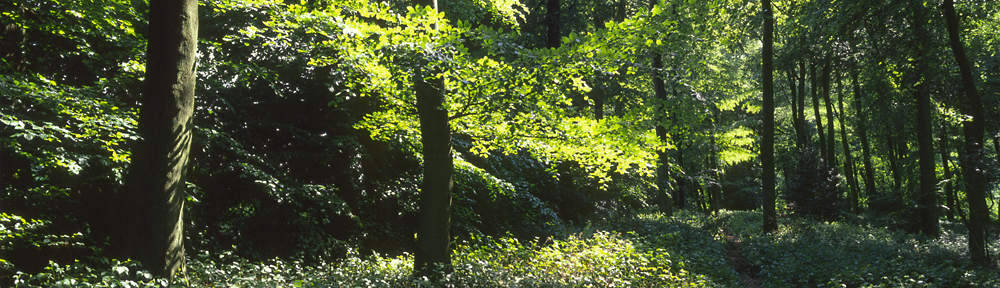
Another of Ivor Gurney’s odd yet oddly compelling poems, that really shouldn’t work: a jumble of seemingly random images and eccentric syntax somehow held together by one passionate and highly individual voice. This one is not one of the war poems for which he became best known (see week 24) but draws on his beloved Gloucestershire, and it is possible that I have a particular affection for it because one hot July in 1989 I walked the Cotswold Way from north to south, and realised I was passing through Gurney country and experiencing as he must have done the same seethe of chaotic sensations: heat and light, the tart smell of dung on pastures, peacock butterflies on purple knapweed, cattle-troughs with clear dark water above the green and amber glimmer of flat limestones, shepherd tracks and pilgrim tracks, edged with meadowsweet and dusty cow parsley, churches cool as lilies in the blaze of the afternoon, sweet smells of hay, ripe smells of barley, acres of gold and auburn stubble, the blessed deep shade of beech woods, hill-forts and standing stones, the turf-clad vallum of Beckbury Camp and the mound of Belas Knap like a strange green space ship. And abbey and almshouse, country mansion and cottage, one can shuffle through that country knee-deep in history like autumn leaves.

Cotswold Ways

One comes across the strangest things in walks:
Fragments of Abbey tithe-barns fixed in modern
And Dutch-sort houses where the water baulks
Weired up, and brick kilns broken among fern,
Old troughs, great stone cisterns bishops might have blessed
Ceremonially, and worthy mounting-stones;
Black timber in red brick, queerly placed
Where Hill stone was looked for – and a manor’s bones
Spied in the frame of some wisteria’d house
And mill-falls and sedge pools and Saxon faces;
Stream-sources happened upon in unlikely places,
And Roman-looking hills of small degree
And the surprise of dignity of poplars
At a road end, or the white Cotswold scars,
Or sheets spread white against the hazel tree.
Strange the large difference of up-Cotswold ways;
Birdlip climbs bold and treeless to a bend,
Portway to dim wood-lengths without end,
And Crickley goes to cliffs are the crown of days.

Ivor Gurney

Week 558: From ‘The Dancers’, by Ivor Gurney

Another of Ivor Gurney’s short poems (see also weeks 24 and 249), slightly eccentric in their diction but with a tenacious individuality. Gurney, a lifelong sufferer from a bipolar disorder no doubt exacerbated by his experiences in the Great War, spent the last fifteen years of his life in psychiatric hospitals. ‘The Dancers’ is a late poem, written while he was institutionalized, and shows the poet clinging like a swimmer to a spar of driftwood to the memory of some rural scene from his beloved Gloucestershire countryside. While in hospital Ivor was visited several times by Helen Thomas, widow of the poet Edward Thomas, whose work he much loved and some of whose poems he had set to music. Helen would bring with her Ordnance Survey maps of the Gloucestershire countryside and united in their separate griefs they would spend the time together tracing out with their fingers footpaths and byways that Edward had walked on, with Gurney, himself a great walker in happier times, remembering every step of the way. [See Helen Thomas, Ivor Gurney — The War Poets Gallery for Helen’s moving account of these meetings].

The poem actually continues for seven more rather incoherent lines, which I’ve cut: the full text can be found in P.J.Kavanagh’s excellent edition of his ‘Collected Poems’.

From ‘The Dancers’

The dancers danced in a quiet meadow.
It was winter, the soft light lit in clouds
Of growing morning – their feet on the firm
Hillside sounded like a baker’s business
Heard from the yard of his beamy barn-grange.
One piped, and the measured irregular riddle
Of the dance ran onward in tangling threads…
A thing of the village, centuries old in charm.

Ivor Gurney

Week 249: Yesterday Lost, by Ivor Gurney

The artist John Constable once wrote ‘The world is wide: no two days are alike, nor even two hours; neither are there ever two leaves of a tree alike since the creation of the world’

I think he would approved of this little poem by Ivor Gurney (1890-1937) on a similar theme. As with many of Gurney’s poems, the syntax may seem a bit odd in places, but the individuality and sincerity of the man shine through. Who else, except perhaps Gerard Manley Hopkins, could have written that ‘precise unpraisèd grace’?

Yesterday Lost

What things I have missed today, I know very well,
But the seeing of them each next day is miracle.
Nothing between Bredon and Dursley has
Any day yesterday’s precise unpraisèd grace.
The changed light, or curve changed mistily,
Coppice, now bold cut, yesterday’s mystery.
A sense of mornings, once seen, for ever gone,
Its own for ever: alive, dead, and my possession.

Ivor Gurney

Week 24: It is near Toussaints, by Ivor Gurney

It is near Toussaints

It is near Toussaints, the living and dead will say:
‘Have they ended it? What has happened to Gurney?’
And along the leaf-strewn roads of France many brown shades
Will go, recalling singing, and a comrade for whom also they
Had hoped well…

On the night of all the dead, they will remember me,
Pray Michael, Nicholas, Maries lost in Novembery
River-mist in the old City of our dear love, and batter
At doors about the farms crying ‘Our war poet is lost.
Madame, no bon!’ – and cry his two names, warningly, sombrely.

Ivor Gurney

The poems of the First World War poet Ivor Gurney dance on the edge of disintegration – it could be argued that not many of them achieve completeness, but they are brave and vulnerable and usually offer some memorable quirk of observation or language.