Week 232: The Sign-Post, by Edward Thomas

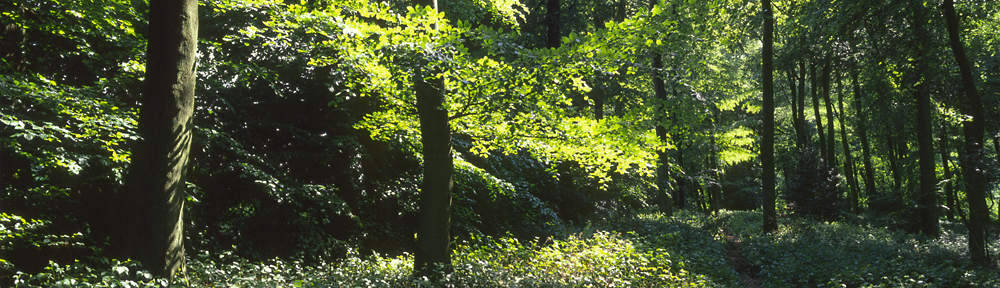
This Sunday, April 9th 1917, marks the 100th anniversary of the death of Edward Thomas, on the first day of the Battle of Arras. I will celebrate it with the first Edward Thomas poem that I ever came across, around the end of the nineteen-fifties. At that time Thomas was still far from having the iconic status among general poetry readers that he now enjoys, and he certainly hadn’t figured in my English teacher’s rather conservative version of the school curriculum, which stopped with that daring modernist Wordsworth (and let us never forget that Wordsworth was a daring modernist). But I fell in love at once with Thomas’s combination of close observation, natural speech rhythms and rueful self-examination.

The Sign-Post

The dim sea glints chill. The white sun is shy,
And the skeleton weeds and the never-dry,
Rough, long grasses keep white with frost
At the hilltop by the finger-post;
The smoke of the traveller’s joy is puffed
Over hawthorn berry and hazel tuft.
I read the sign. Which way shall I go?
A voice says: You would not have doubted so
At twenty. Another voice gentle with scorn
Says: At twenty you wished you had never been born.

One hazel lost a leaf of gold
From a tuft at the tip, when the first voice told
The other he wished to know what ’twould be
To be sixty by this same post. ‘You shall see,’
He laughed – and I had to join his laughter –
‘You shall see; but either before or after,
Whatever happens, it must befall,
A mouthful of earth to remedy all
Regrets and wishes shall freely be given;
And if there be a flaw in that heaven
’Twill be freedom to wish, and your wish may be
To be here or anywhere talking to me,
No matter what the weather, on earth,
At any age between death and birth, –
To see what day or night can be,
The sun and the frost, the land and the sea,
Summer, Autumn, Winter, Spring, –
With a poor man of any sort, down to a king,
Standing upright out in the air
Wondering where he shall journey, O where?

Edward Thomas

Week 231: Aubade, by Philip Larkin

‘No longer in Lethean foliage caught
Begin the preparation for your death
And from the fortieth winter by that thought
Test every work of intellect or faith,
And everything that your own hands have wrought,
And call those works extravagance of breath
That are not suited for such men as come
Proud, open-eyed and laughing to the tomb’

So wrote W.B.Yeats in ‘Vacillation’. To judge by that standard I doubt if Yeats would have thought much of the following poem, at least so far as its spirit goes, and for that matter neither do I, and yet I admire it greatly, for honesty can be admirable even if what you are being honest about is not admirable. Yes, the poem’s message may seem profoundly nihilistic. ‘Death is no different whined at or withstood’ – to which one is tempted to reply, that may very well be so, but the person doing the whining or withstanding certainly is. Yet in other ways the poem is anything but nihilistic: it does after all affirm the preciousness of life, of what in another masterly poem, ‘The Old Fools’, Larkin calls the ‘million-petalled flower of being here’. And as always with Larkin we have such craftsmanship, such felicity, which is in itself an affirmation, and perhaps the truest one that a poet can make.

Aubade

I work all day, and get half-drunk at night.
Waking at four to soundless dark, I stare.
In time the curtain-edges will grow light.
Till then I see what’s really always there:
Unresting death, a whole day nearer now,
Making all thought impossible but how
And where and when I shall myself die.
Arid interrogation: yet the dread
Of dying, and being dead,
Flashes afresh to hold and horrify.

The mind blanks at the glare. Not in remorse
– The good not done, the love not given, time
Torn off unused – nor wretchedly because
An only life can take so long to climb
Clear of its wrong beginnings, and may never;
But at the total emptiness for ever,
The sure extinction that we travel to
And shall be lost in always. Not to be here,
Not to be anywhere,
And soon; nothing more terrible, nothing more true.

This is a special way of being afraid
No trick dispels. Religion used to try,
That vast, moth-eaten musical brocade
Created to pretend we never die,
And specious stuff that says No rational being
Can fear a thing it will not feel
, not seeing
That this is what we fear – no sight, no sound,
No touch or taste or smell, nothing to think with,
Nothing to love or link with,
The anaesthetic from which none come round.

And so it stays just on the edge of vision,
A small unfocused blur, a standing chill
That slows each impulse down to indecision.
Most things may never happen: this one will,
And realisation of it rages out
In furnace-fear when we are caught without
People or drink. Courage is no good:
It means not scaring others. Being brave
Lets no one off the grave.
Death is no different whined at than withstood.

Slowly light strengthens, and the room takes shape.
It stands plain as a wardrobe, what we know,
Have always known, know that we can’t escape,
Yet can’t accept. One side will have to go.
Meanwhile telephones crouch, getting ready to ring
In locked-up offices, and all the uncaring
Intricate rented world begins to rouse.
The sky is white as clay, with no sun.
Work has to be done.
Postmen like doctors go from house to house.

Philip Larkin

Week 230: The Lucky Marriage, by Thomas Blackburn

I much admire this poem by Thomas Blackburn (1916-1977), especially the first three stanzas with their perceptive take on fairy-tales, but I confess I get a bit lost in the last stanza where I feel the need, as rather often with more modern poetry, of someone cleverer than me to explain a few things. What does he mean ‘reach beyond our pronouns and come into ourselves’? That we must stop relying on other people for our spiritual completeness? And what exactly is ‘the lucky marriage’? Any elucidation gratefully received…

The Lucky Marriage

I often wonder, as the fairy story
Tells how the little goose-girl found her prince
Or of the widowed queen who stopped her carriage
And flung a rose down to the gangling dunce,
What is the meaning of this lucky marriage
Which lasts forever, it is often said,
Because I know too well such consummation
Is not a question of a double bed,
Or of the bridal bells and royal procession
With twenty major-domos at its head.

At least its bride and groom must be rejected.
The fairy godmother will only call
On Cinders scrubbing tiles beside the chimney
While her proud sisters foot it at the ball
From all but the last son without a birthright
The beggar-woman hoards her magic seed
Well, if they’d had the good luck of their siblings
And found occasion kinder to their need
They would have spent their breath on natural pleasures
And had no time for murmurs in the night
They heard because they were condemned to silence
And learnt to see because they had no light.

I mean the elder son and cherished sister
Know but the surface of each common day,
It takes the cunning eye of the rejected
To dip beneath the skin of shadow play
And come into the meaning of a landscape.
I think that every bird and casual stone
Are syllables thrust down from some broad language
That we must ravel out and make our own.
Yet who is ever turned towards that journey
Till deprivations riddle through the heart,
And so I praise the goose-girl and the scullion
Who lie together by the refuse cart.

And yet all images for such completion
Somehow by-pass its real ghostliness,
Which can’t be measured by a sweating finger
Or any salt and carnal nakedness.
Although two hands upon a single pillow
May be the metaphor which serves it best,
No lying down within a present moment
Will give the outwardgoing any rest,
It’s only when we reach beyond our pronouns
And come into ourselves that we are blest.
Is this the meaning of the lucky marriage
Which lasts forever, it is often said,
Between the goose-girl and the kitchen-servant,
Who have no wedding-ring or mutual bed?

Thomas Blackburn

Week 229: Tiger, by A.D.Hope

An intriguing if slightly enigmatic piece by the Australian poet A.D. Hope (1907-2000). Hope was a great admirer of W.B.Yeats and I think it shows in this poem’s aristocratic stance, its disdain for the values of materialism and the market place, for what Yeats called ‘the fool heart of the counting-house’. So what are the paper tigers, and what is the real tiger? Well, your guess is as good as mine, but I take the paper tigers to be embodiments of that materialism, the big corporations, consumerism, the culture of conformity, and the real tiger to be the embodiment of whatever stands against that: independence of spirit, creativity, the natural world. There may seem to be a bit of a contradiction in the poem, in that in line seven we have ‘the harmless paper tiger’ but then in line twelve we are told that it ‘riddles and corrupts the heart’, which doesn’t sound very harmless. But perhaps Hope means that the paper tiger is a purely human construct that has only such power over us as we allow it to have, as compared with the real tiger that exists in its own dangerous, exhilarating reality beyond us.

Tiger

At noon the paper tigers roar
— Miroslav Holub

The paper tigers roar at noon;
The sun is hot, the sun is high.
They roar in chorus, not in tune,
Their plaintive, savage hunting cry.

O, when you hear them, stop your ears
And clench your lids and bite your tongue.
The harmless paper tiger bears
Strong fascination for the young.

His forest is the busy street;
His dens the forum and the mart;
He drinks no blood, he tastes no meat:
He riddles and corrupts the heart.

But when the dusk begins to creep
From tree to tree, from door to door,
The jungle tiger wakes from sleep
And utters his authentic roar.

It bursts the night and shakes the stars
Till one breaks blazing from the sky;
Then listen! If to meet it soars
Your heart’s reverberating cry,

My child, then put aside your fear:
Unbar the door and walk outside!
The real tiger waits you there;
His golden eyes shall be your guide.

And, should he spare you in his wrath,
The world and all the worlds are yours;
And should he leap the jungle path
And clasp you with his bloody jaws,

Then say, as his divine embrace
Destroys the mortal parts of you:
I too am of that royal race
Who do what we are born to do.

A.D.Hope

Week 228: Wood Magic, by John Buchan

At the back of the house where I lived as a child was the Field, and beyond the Field was the Wood. I can see now that it was neither a very big wood nor a very wild one, but everything seems bigger and wilder when you are a child, and since I was brought up in the carefree days of the nineteen-fifties when mothers really didn’t care where you were for most of the day as long as you weren’t indoors getting under their feet, an awful lot of my free time from the age of six or so was spent wandering its groves and dells, sometimes in company but often alone. It was a place that for me combined fear and romance in equal measure: to step into it seemed to be to enter another, older time, and when at the age of twelve I came across this poem in John Buchan’s ‘The Moon Endureth’ (having first been attracted to that book by a remarkable short story ‘The Lemnian’), I felt I knew exactly what Jehan the hunter was talking about. It may seem a very old-fashioned sort of poem now, but somehow it still brings back to me (as does Kipling’s ‘The Way Through The Woods’), the magical experience of entering the Wood as a child, late on a summer evening with twilight already gathering under the trees.

Wood Magic

I will walk warily in the wise woods on the fringes of eventide,
For the covert is full of noises and the stir of nameless things.
I have seen in the dusk of the beeches the shapes of the lords that ride,
And down in the marish hollow I have heard the lady who sings.
And once in an April gloaming I met a maid on the sward,
All marble-white and gleaming and tender and wild of eye; –
I, Jehan the hunter, who speak am a grown man, middling hard,
But I dreamt a month of the maid, and wept I knew not why.

Down by the edge of the firs, in a coppice of heath and vine,
Is an old moss-grown altar, shaded by briar and bloom,
Denys, the priest, hath told me ’twas the lord Apollo’s shrine
In the days ere Christ came down from God to the Virgin’s womb.
I never go past but I doff my cap and avert my eyes –
(Were Denys to catch me I trow I’d do penance for half a year) –
For once I saw a flame there and the smoke of a sacrifice,
And a voice spake out of the thicket that froze my soul with fear.

Wherefore to God the Father, the Son, and the Holy Ghost,
Mary the Blessed Mother, and the kindly Saints as well,
I will give glory and praise, and them I cherish the most,
For they have the keys of Heaven, and save the soul from Hell.
But likewise I will spare for the Lord Apollo a grace,
And a bow for the lady Venus – as a friend but not as a thrall.
‘Tis true they are out of Heaven, but some day they may win the place;
For gods are kittle cattle, and a wise man honours them all.

John Buchan

Week 227: The Send-off, by Wilfred Owen

My home in South Oxfordshire is only a few miles from the village of Dunsden, where the poet Wilfred Owen worked before the First World War as a lay assistant to the vicar. It was not a happy time for him: he clashed with his employer and became disenchanted with the Church, which he saw as being indifferent to the poverty and ill-health that he saw all round him. But now Dunsden is understandably rather proud of its association with the awkward young man who went on to become the greatest poet of the First World War, and last weekend my wife and I went to a Snowdrop Sunday at the church there which featured a celebration of the poet and a reading from his work, that included the poem below.

It’s a secretive, anonymous countryside, this southern outlier of the Chiltern Hills, only a few miles from the bustle of Reading, but its lanes and woods can seem little changed from an older time, and it struck me that though Owen wrote this poem during his stay at Craiglockhart in Scotland, this may well have been the area he had in mind when he wrote in the closing lines of ‘half-known roads’ and ‘village wells’ – a very fine example of a village well can still be seen a few miles away at Stoke Row.

The Send-off

Down the close, darkening lanes they sang their way
To the siding-shed,
And lined the train with faces grimly gay.

Their breasts were stuck all white with wreath and spray
As men’s are, dead.

Dull porters watched them, and a casual tramp
Stood staring hard,
Sorry to miss them from the upland camp.
Then, unmoved, signals nodded, and a lamp
Winked to the guard.

So secretly, like wrongs hushed-up, they went.
They were not ours:
We never heard to which front these were sent.

Nor there if they yet mock what women meant
Who gave them flowers.

Shall they return to beatings of great bells
In wild trainloads?
A few, a few, too few for drums and yells,
May creep back, silent, to still village wells
Up half-known roads.

Wilfred Owen

Week 226: So We’ll Go No More a-Roving, by Lord Byron (George Gordon)

There is a paradox about this best and best-known of Byron’s lyrics, which is that it is really not very Byronic, that it bears so little imprint of the entertainingly dodgy character who pervades poems like ‘Don Juan’. Instead, it attains to the kind of anonymous purity and freshness one normally associates with folksong, in the way that Burns or chameleonic Shakespeare sometimes managed.

So, We’ll Go No More a-Roving

So, we’ll go no more a-roving
So late into the night,
Though the heart still be as loving,
And the moon still be as bright.

For the sword outwears its sheath,
And the soul wears out the breast,
And the heart must pause to breathe,
And love itself have rest.

Though the night was made for loving,
And the day returns too soon,
Yet we’ll go no more a-roving
By the light of the moon.

Lord Byron (George Gordon)

Week 225: Linum, by Alison Brackenbury

Some years ago one of the fields round the South Oxfordshire village where I live, normally given over to corn, turned a most amazing shade of blue, as if a patch of heaven had fallen to earth, though it appears that a more mundane explanation had to do with EU subsidies at the time. At first I was completely puzzled as to what the crop could be, until I remembered a passage from John Moore’s ‘Brensham Trilogy’: ‘an azure mist upon the field, like smoke from a squitch-fire’. Of course: this was flax or linseed, the ‘blue field’ that had given the third of the trilogy its title. After due contemplation I went on my way with a definite feeling that here was something I would one day write a poem about. Now, you can’t rush these things: a poem will come when it’s ready, but there can be a small problem with this relaxed attitude, as I discovered when some time later I came across this piece by Alison Brackenbury and found, slightly to my annoyance, that she had very definitely scooped me. Fair play to Alison though: it’s hard to imagine how anyone could have made a better job of it.

Linum

It is not tall enough, it will not make a crop –
it has changed its name. It used to be flax,
maker of sheets for fine ladies’ beds.
Now it is linseed; feeds cattle.
It is high as a knee, blown with threads of leaf,
scattered with flower. What corn is blue?

They are mouths, they are stars, they gleam
sweet as those pictures of children under dark leaf
in frames of dark gilt. It knows nothing;
the sky is bitterer. Last night’s sun
was icy lemon, with drifts fog grey;
the morning’s blaze is for storm. The flax flowers
begin to shimmer, with a metal edge,
to reflect ripe cloud, race a colder sea.
The flies still whirl in hot air, and I
rise quick up the ridge, through the brief, starred fields.
It is not every day you can run through the sky.

Alison Brackenbury


Week 224: Je me souviens, by Jules Supervielle

The French poet Jules Supervielle (1884-1960) wrote many tender love poems to his wife Pilar, whom he married in Montevideo in 1907, Uruguay (the country ‘fort au sud’ referred to in the poem) being the country of his birth. This is one of them. 

The translation that follows is my own. I confess to not quite understanding the words in the fourth line ‘lui donne son nom’ – did Supervielle think that the French words ‘coeur’ and ‘carrefour’ were etymologically connected? This does not in fact seem to be the case. 

Je me souviens

Je me souviens – lorsque je parle ainsi
Ah saura-t-on jamais qui se souvient
Dans tout ce chaud murmurant carrefour
Qui fait le coeur et lui donne son nom –
Je me souviens, c’était dans un pays
Qu’on aperçoit fort au sud sur les cartes,
Le ciel mouillait à tort et à travers
Le grand matin noir et plein d’innocence.
Je me souviens – cette fois je suis sûr
Qu c’est bien moi qui hume ce temps-là –
Je vous trouvai durant une accalmie
Vous qui deviez devenir mon amie
Pendant vingt ans, et c’est encor vrai.

Jules Supervielle

I Remember 

I remember – ah, but when I speak this way
Can we ever know for sure what memories
Meet at that warm murmuring crossroads within
We call the heart, which gives it its name? –
I remember, it was in another country
You see on maps a long way to the south.
It rained as if the rain would never cease
That great dark morning full of innocence.
I remember – and for once I am quite sure
That it is I who breathe in that time’s air –
I found you as the sky began to clear
You who would become my wife, my friend
These twenty years gone by, and are still here.

Week 223: Bells for John Whiteside’s Daughter, by John Crowe Ransom

I promised we’d come back to John Crowe Ransom so here is another of his elegies for dead children (cf. week 50), and again it is something of a puzzle to me, not because of any difficulty with the meaning, but because one feels that Ransom’s slightly archaic style, fastidious to the point of preciousness, like a man handling words with white gloves, simply should not work as well as it does, especially for a subject of such pathos. Yet somehow those cadences mesmerise.

Bells for John Whiteside’s Daughter

There was such speed in her little body,
And such lightness in her footfall,
It is no wonder her brown study
Astonishes us all.

Her wars were bruited in our high window.
We looked among orchard trees and beyond
Where she took arms against her shadow,
Or harried unto the pond

The lazy geese, like a snow cloud
Dripping their snow on the green grass,
Tricking and stopping, sleepy and proud,
Who cried in goose, Alas,

For the tireless heart within the little
Lady with rod that made them rise
From their noon apple-dreams and scuttle
Goose-fashion under the skies!

But now go the bells, and we are ready,
In one house we are sternly stopped
To say we are vexed at her brown study,
Lying so primly propped.

John Crowe Ransom